

What Is Elevated Horror?
I'm not a fan of the term ‘Elevated Horror’, but find myself using it in a webinar I’m hosting today. So, I thought I’d take the time here to explore the concept a little more fully.


Elevated Horror. What even?
Firstly, the word ‘elevated’ is problematic, implying the existence of an arcane values system, one that decrees some examples of horror storytelling ‘lowly’ while raising others on high. Those who apply the word ‘elevated’ to the genre tend to claim control over this value system, giving bonus points to the things they like to see in horror movies while dismissing others’ taste as basic.
I like elevated horror and elevated horror only. I take no pleasure in ordinary horror. My tastes are more sophisticated than yours, my thinking loftier, and this makes me horrorior than thou.
Yeah. But no.
I regard the horror genre as a broad church. Multitudes flock through its doors, all seeking one thing: visceral thrills. Those thrills might come packaged with psychological intensity, violence, spirituality, catharsis, social commentary, tentacles, and/or naked breasts. However which way it lands, horror pushes you across the threshold by introducing a threat that triggers a fear response (fight, flight, freeze, or laugh) and increases your heart beat. It makes you feel something you don’t usually feel. It takes you out of your daily drag and makes you believe, for ninety minutes or so, that the things people choose or do or say actually matter, because if the characters in a horror movie make mistakes or behave like idiots, they die. In horror, actions have very satisfying consequences.
That broad church also offers many perspectives. Horror welcomes stories by and about the marginalized, the neurodivergent, the alien, the underdogs, the dispossessed. The genre invites creators to spelunk their obsessions and share what they find in those depths. And through sharing another’s fears, we learn so much. If you can’t begin to understand someone until you’ve walked a mile in their shoes, then running from a monster in those same shoes offers even more intense insight into their psyche. And your own.
Fear is intensely personal and horror hits different people in different ways. In Barthesian terms, horror movies are scriptible texts, constantly blurring the boundaries between the real and the artificial. Horror movies are reactive, their meaning depends on how the audience interacts with them. One woman’s “Aw hell, no!” is another’s “What else have you got?” There’s a timing factor too. The same movie or book can hit differently when revisited, as so much of what scares us is rooted in our current situation and anxieties. A movie that jangles every raw nerve in your body one year might induce a ‘Meh’ in another era. Our changing fears chart our individual evolution: you vanquish one terror and gallop on to confront the next. And the next. And the next. Supposedly, Alexander the Great wept when there were no more worlds to conquer. Would I weep when every single last solitary fear of mine had been allayed? Yes, I would.
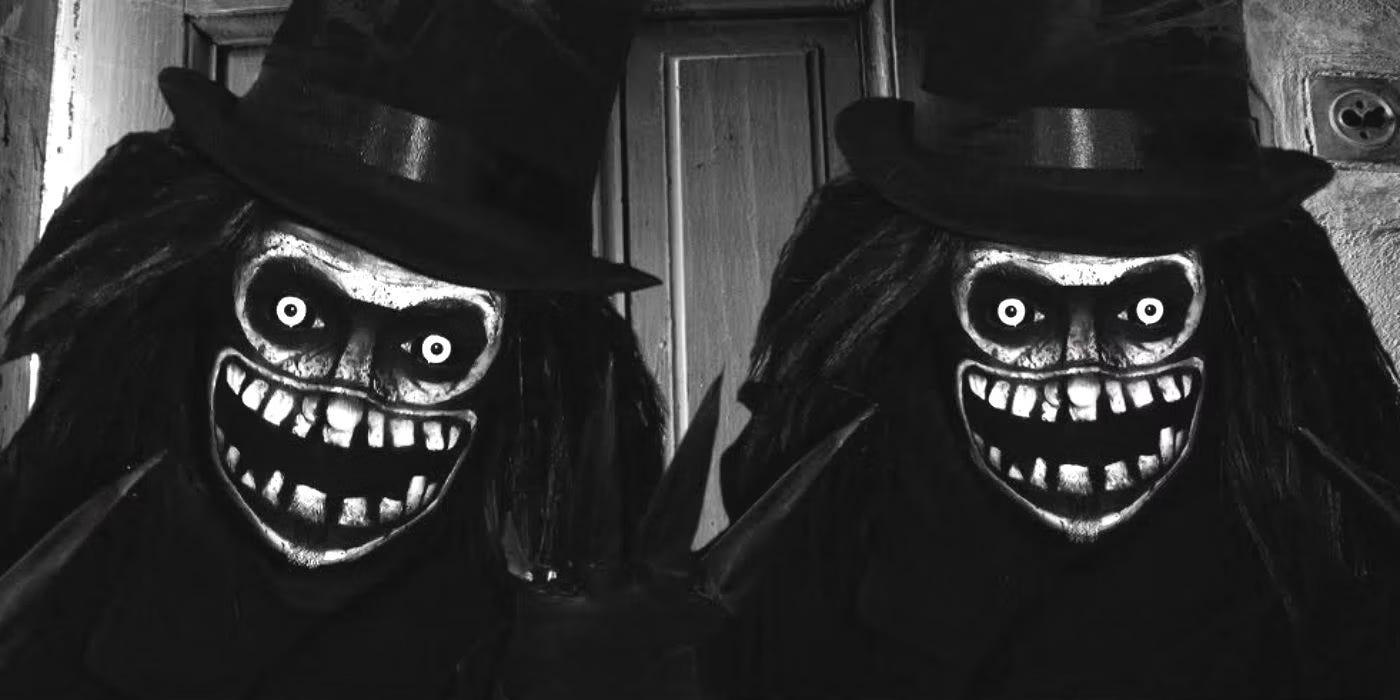
So, if regular, ordinary, everyday horror offers such catharsis, how do you elevate it? The descriptor ‘elevated horror’ first gained traction in the early 2010s, around the release of movies like THE BABADOOK and UNDER THE SKIN (both 2014). The latter is an A24 movie, the production company that has become synonymous with ‘elevated horror’ in the years since. However, a quick perusal of ALL the movies distributed by A24 since that era (Wikipedia has a handy list) suggests that A24≠elevated horror. Their releases range far and wide, and even though they have supported the work of ‘elevated’ stalwarts like Ari Aster, Robert Eggers and Alex Garland, these movies don’t define their output. So ‘elevated horror’ is broader than just one production company.
Broadly speaking, ‘elevated horror’ describes horror movies that support multiple readings. Polysemic. Fluid characters and stories you can argue about, because they defy a single interpretation. Movies that set out to explore a concept from different angles, offering hypothesis, antithesis and thesis as well as a fun ride and cheap thrills. The kind of movies that used to be referred to as psychological thrillers, with the narrative emphasis on the horrors of the mind rather than external gore. Horror, as Joe Bob Briggs suggests, for people who hate horror. Horror for people who haven’t really paid attention to the first hundred years of genre movies. If you think horror only managed to become worthy of your elevated tastes in the 2010s, I suggest you check out THE CABINET OF DR. CALIGARI made in 1919.
My own theory about the term ‘elevated horror’ is that it is reactionary, coined to protect the sensibilities of late millennials, who may have been exposed to the excesses of mid 2000s torture porn (which for some reason became the dominant mode in mainstream horror) at a too-early age. Yes, a lot of genre movies released in the first decade of the 21st century were gratuitously violent, overtly misogynistic, cynical, derivative, and creatively bankrupt. Blame…the Iraq war? I can understand how adolescents ‘saw’ (geddit?) what mainstream horror was in the mid-00s and thought “no thanks, not for me.” Then, as they entered late adolescence/early adulthood and were seduced by the dreamlike ambiguity of movies like IT FOLLOWS or THE VVITCH, they sought ways of distinguishing—and self-permitting—their newfound pleasure in these texts. This horror, not THAT horror. Ugh, nasty!
Whatever. As a Gen-Xer, I grew up on the VHS excesses of the 1980s, consuming a vast array of guts and bloodshed, some of it legal, some not, and relishing everything from the cerebral discourse presented by Cronenberg or Craven to the simpler titillation of SLEEPAWAY CAMP I-V. One person’s trash B-movie is my treasure. I find meaning and a weird kind of comfort in all of them.
I also enjoy a horror movie that sets out to be more challenging, that tells a story through ellipsis and ambiguity and lets the audience make up their own minds about what caused all the inhabitants of the remote cabin to slaughter one another at the last full moon. The online discourse surrounding the release of LONGLEGS a couple of weeks ago was delightful: people responded in so many different ways to the same movie screened at roughly the same point in time. Sometimes, in our distracted two-screen era, it’s good for a movie to feel like homework, to be pondered, even watched again to better understand the subtext as you excavate your personal connection to the story, and then endlessly discussed. If you want an assignment, try Ingmar Bergman’s HOUR OF THE WOLF (1968).
Ultimately, ‘elevated horror’ is just another externally-applied label, an attempt to identify as novel the type of movies that have always been present, albeit less obvious, within the horror genre. If that’s what it takes to sell a movie to a certain audience, fine. If it allows diverse filmmakers to work outside conventional paradigms and explore deeply personal concepts within a horror framework, while still making a living, even better (go Jane Schoenbrun!). And, if it allows horror filmmakers to be recognized as serious and successful artists on a par with their peers in other genres, up to and including a Best Picture Academy Award (GET OUT), best of all.
I’ll take ‘elevated’ in that context, but, rather than raising up certain horror movies as more worthy of attention and ignoring the rest, I’d rather dig into them all. Horror is a genre of ideas. B-movies rock, and often deal with high concepts in a much more pithy and thought-provoking manner than the bloated two and a half hour ‘exploration of grief’ loaded with A-listers and awards-season pretensions. Hit me up for reccs in the comments!
I too enjoy horror of many kinds. I used to wonder why watching them brings me comfort but now I have excepted that it's just what thrills me. Great post.